Evan Puah
Producer, UI & General Programmer
Projects
Fawn The Florist
Producer, UI Design & Programmer
Snap Lake Adventures
Producer, Quest/ NPC Programming & Marketing
Aletheia's Gun
Producer, UI Design & Programmer
About Me

Hello! o/
I'm Evan Puah, a Brisbane based developer specialising in producing and UI programming in Unity. I enjoy diving into the many facets of game development, constantly learning and expanding my skill set to build fun and engaging games.Skills I'm Best At...
Experienced producer from small (3 people) to medium size teams (11 people).
Understanding of all aspects of development from Design, Programming, QA, Marketing and Art.
UI Design/ Mockups
UI Programming + Animation Tweening
Inventory/ Quests Systems
Collaborative, kind and proactive team member
Feel free to send me a message via any of my socials for referee details
Skills
Game Engines & Programming

Unity
C#

Python

Github
Editing/ Project Management

Premiere Pro

Photo Shop

Trello

Google Suite
Education
Bachelor of Games and Interactive Environments/ Business
Queensland University of Technology
2021 - 2025
Software Technologies & Marketing Major
Certificate
Certificate III in Screen and Media
LIGHTMARE STUDIOS Paid Traineeship
2020 - 2021
Snap Lake Adventures
My Roles: Producer, Quest + Rio NPC Programming & Marketing
About the game
In Snap Lake Adventures, you step into the role of a nature photographer, rowing your boat through a tranquil lake teeming with life. Guided by the friendly park ranger Rio and armed with your camera, you'll explore, observe, and uncover the lake’s hidden secrets—capturing perfect wildlife moments one paddle at a time.
Specifications
A student project made for subject IGB388
Developed By: Team Cozyboats
Cameron Bowes: Concept Lead & Main Programmer
Zi Xuan Sean Ng: Level & Enviromental Design, Tutorial System & Animal NPC Programming
Evan Puah: Producer, Quest + NPC Programming & Marketing
Summary of Work & Contributions
Managed the development timeline ensuring the game met the desired user experience and was ready for distribution.
Developed the quest system and NPC interactions.
Iterated on the quest and NPC design through in-person playtesting, survey creation, playtest reports, and data logging.
Created marketing assets and prepared resources for public game showcase (task allocation, equipment prep, build delivery).

Project Outcomes
This project gave me a deeper understanding of VR game development, including both its strengths and its limitations. Because the game relied heavily on movement-based mechanics, it became clear how essential it is to test frequently with a diverse range of VR users to minimise motion sickness and ensure a comfortable player experience. I particularly enjoyed exploring effective ways to communicate quest objectives and completions within a VR space, which allowed me to further develop my UI design skills for 3D environments.The project also strengthened my project management abilities. Unexpected disruptions caused by cyclone events, along with the addition of a showcase, required the team to remain flexible and adapt our priorities and resource allocation accordingly.
As a result of the team’s hard work, we were successful in being selected to showcase our game at the QUT Immersive Festival 2025 and QUT Open Day. Through this experience, I further developed my marketing skills by creating promotional posters, building an Itch.io store page, and producing gameplay footage. It also gave me valuable experience presenting a game in a public setting and preparing a booth that was safe, accessible, and enjoyable for all players.
Programming Work
Designing the quest Area

Before

After
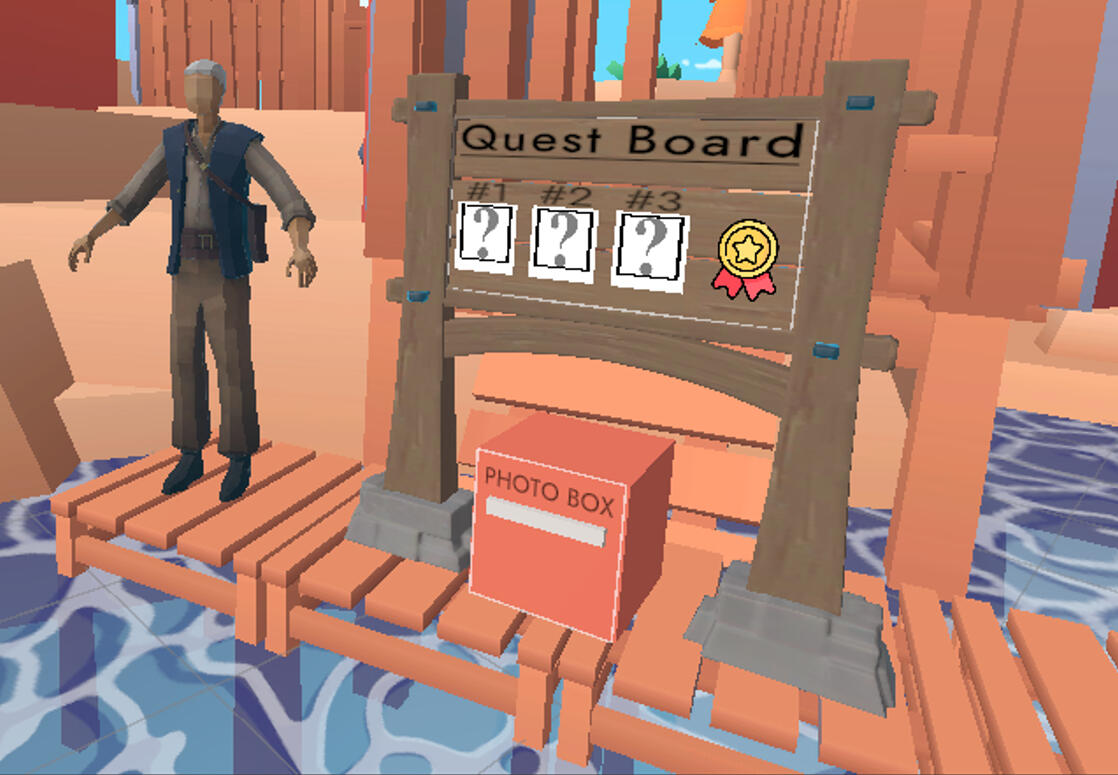
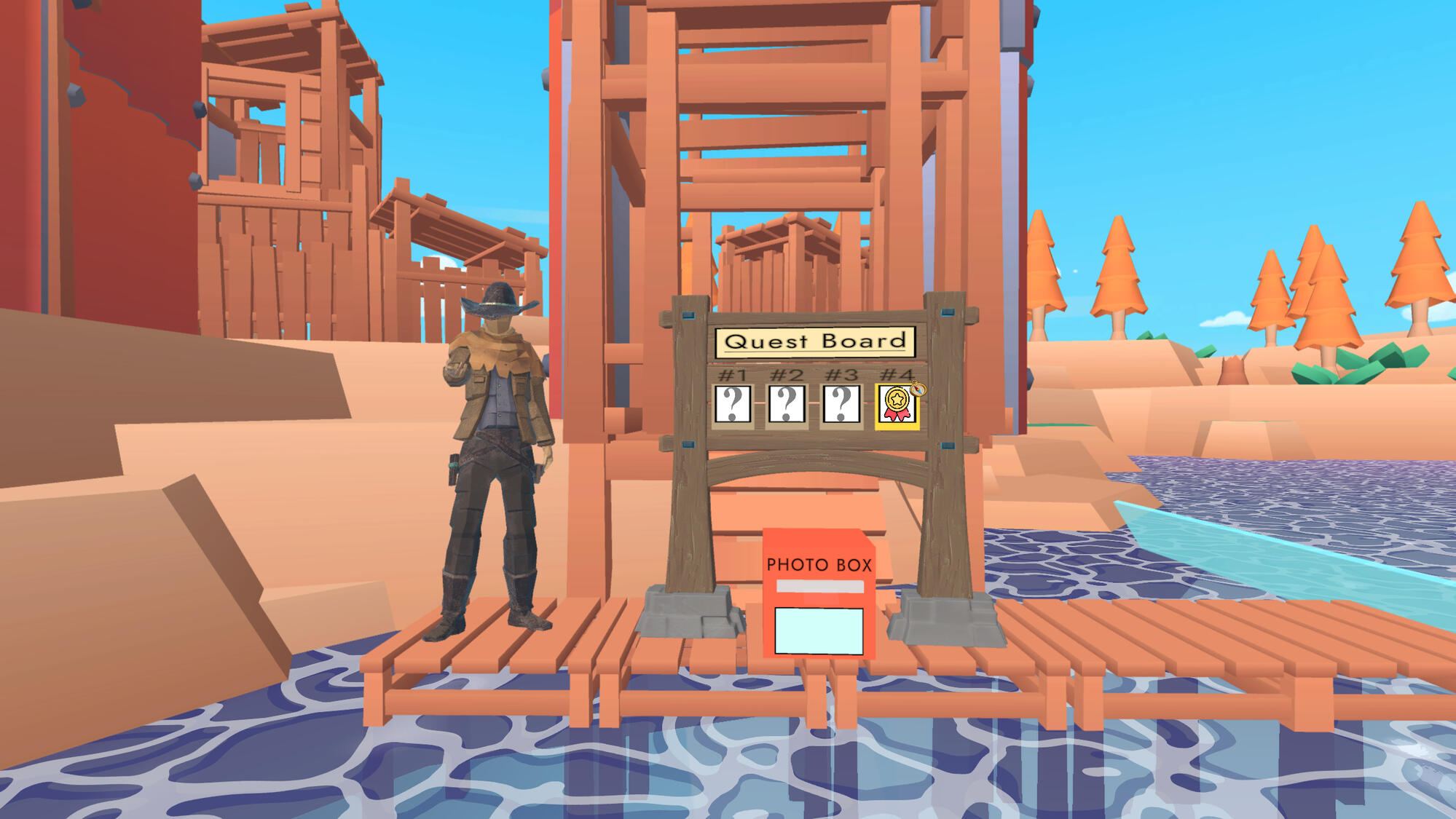
As the primary progression hub, it was essential to design a space that worked for VR whilst keeping with the national park ranger theme. Because poor accessibility could result in a soft lock, I was meticulous in ensuring all interactive elements were clearly visible, readable, and audible from a seated boat position. This helped guarantee that players could comfortably and reliably progress without frustration.
Assets used from VertexModeler Team & Third Asset
Making Rio's Interactions
Rio's initial design was simple with a text box appearing as the player was in vicinity. This proved unintuitive as players often missed the textbox due to the direction they were looking at. To resolve this, I recorded voice lines for Rio via Audacity and implement them with spatial audio. To further draw attention and give feedback Rio would play an animation when a quest was selected, completed or the player entered/ left the quest area.
These changes made Rio more engaging, immersive and prevented soft locks.
The Photo Submission Box
Similarly, the photo box lacked feedback making it difficult for players to know if they were submitting properly. To resolve this a blue outline appeared when a photo could be dropped, relevant sound effects added and a text display given to say why whether a photo was accepted or rejected. At times players left a photo in and could not submit a photo. As such an auditory cue telling the player to remove the photo was made.

Data Logging
As part of the subject, we implemented data logging in Unity to track metrics such as time played, photos taken, and task completion times. This data allowed us to refine the game, evaluate improvements, and make informed design decisions.
Marketing Work
Drawing on my experience creating thumbnails and videos for YouTube, I produced posters and gameplay videos using OBS, Adobe Photoshop and Premiere Pro. Not being a trained artist, I iterated on the design’s multiple times, incorporating feedback from students with design and art experience. The result ended up looking great and worked well to display our game during the showcases we attended. There was roughly 5 iterations of the poster before the final one was selected.

Before

After

Itch.io Page

Showcase Setup


Athletheia's Gun
My Roles: Producer, UI Design & Programmer
About the game
As the renowned detective Steve De’gunn you are uniquely qualified to solve otherwise unsolved crimes through your dimension switching ability named Aletheia. Aletheia allows you to see the hidden nature of the world and its people to discover truths that would never show in reality. Gather evidence and testimonies, analyse to find the truth and interrogate the suspect to break their alibi to bring justice for all.
Specifications
Made as part of the Pirate Software GameJam 16
Developed By
Evan Puah: Producer & Programmer
Zi Xuan Sean Ng: Gameplay & Level Design
Qinoir: Art Director, Narrative Writer & Character Artist
Bikikkii: Background Artist, Sound & Music Sourcing
Tako0275: UI & Prop Artist, Gameplay & Level Design (Support)
Summary of Work Contributions
Created and managed project timeline ensuring gameplay features aligned with player experience goals and functioned as intended.
Assisted with writing and formatting the Game Design Document.
Utitlised the Fungus Unity plugin to develop narrative text, multi-choice dialogue, movement system & Aletheia realm mechanic.
Collaborated with the UI artist to design the User Interface and programmed the inventory and investigation systems.
Conducted both internal & external playtesting of the game.
Created the itch.io page & published the game.

Project Outcomes
Athletheia’s Gun would be my first game jam and opportunity to work with students from other universities. The project helped me establish a working method for team communication and information distribution keeping tasks on track and all members informed, particularly important as we were a virtual team. I learnt the importance of flexibility, creating new project management to facilitate new needs and conversely dropping project management that was not fit for purpose. It was also my first opportunity to fully embrace a proactive producer style. As much of the team was new to game development setting check-in dates for tasks allowed for features to be fixed or solutions proposed before they became problems.Working with a UI artist allowed me to learn a collaborative workflow where I would mock-up what would be feasible from concepts drawn before finalising and refining assets. I would also gain valuable experience in the foundations of UI within Unity, creating inventory and quest tracking systems as well as integrating existing code tools such as Fungus with these systems to reduce workload broadening my UI and general programming skills.Overall, the team succeeded in creating a simple, fun and polished visual novel within 2 weeks that placed respectably at 256 out of 1,745 entries with positive feedback from the judging team.
Producer Work
A key factor in our team’s success during the game jam was recognising our strengths and limitations early. With three skilled artists but limited experience in game development and only one designer and programmer, we chose a simple, achievable concept being a visual novel-style game that balanced our resources effectively.During production, I kept project management simple and flexible. We used Discord for communication, sharing ideas, and organising channels. The art team operated under its own lead, while I oversaw game design, programming, and integration to ensure all elements worked together smoothly.


Programming Work

Working with Fungus Plugin
As the sole programmer with no prior visual novel experience, I chose to streamline development by using a plugin to handle core functionality. This allowed me to quickly prototype UI designs and give the artists clear guidance on required assets.We used Fungus, a free (though deprecated) Unity tool, which provided everything we needed. Its active Discord community helped me overcome knowledge gaps. Fungus uses blueprint-style block coding but can also be extended with scripts, allowing me to add custom functions beyond its built-in capabilities.Fungus was used to implement the text writer, multi-dialogue, scene transitions and Alethetia's Switch.

To connect the inventory system to Fungus simply call an event block

Inventory Menu & Game Systems
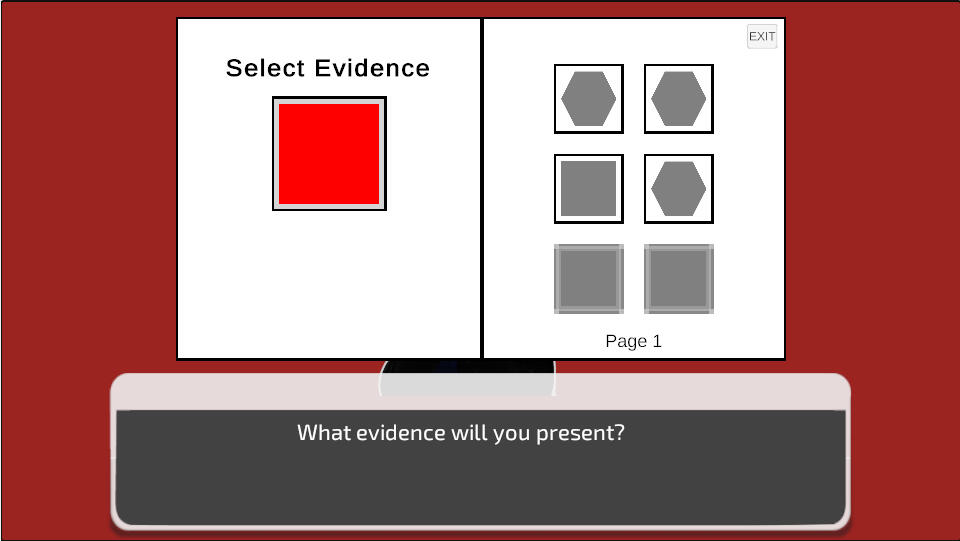
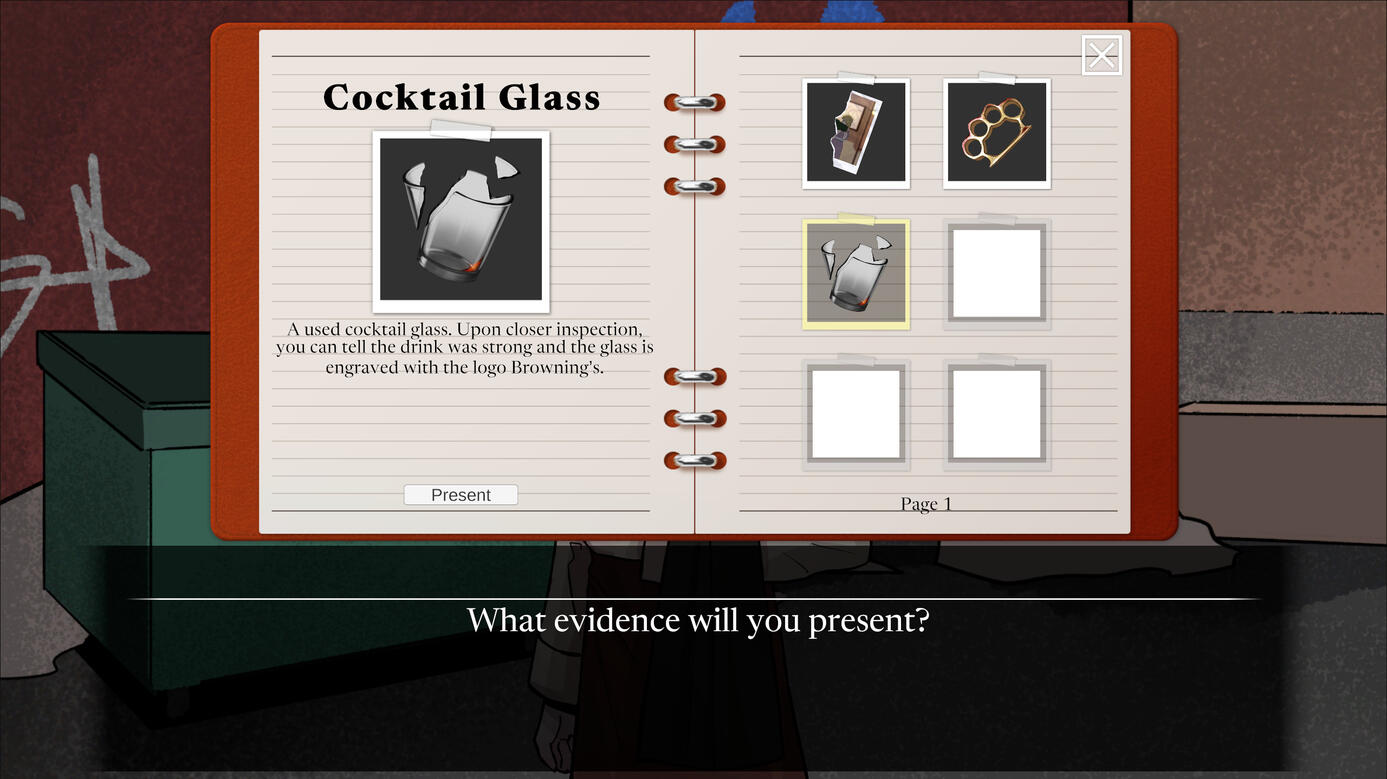
The game required a fluid inventory and found item UI that would update accordingly to the order players collected evidence. This meant creating a system that was not fixed. This was a fun challenge, I would use an array to store evidence objects and created a system that would allow extra pages for more evidence to display making it expandable. The inventory menu would also update accordingly based on the evidence selected to present it or combine it into new evidence.

Before (In-game Mockup)

After
Evidence Collection Mechanic
This mechanic proved to be more complicated than it first appeared. To provide clear player feedback, each object required a collider that matched its shape rather than a simple box collider, preventing confusion when clicking on areas like the concrete floor. To avoid players mistaking previously discovered objects for new evidence, a distinct “found” cursor icon also needed to be implemented. Additionally, it was important to prevent players from clicking through text scenes and accidentally interacting with evidence in the background. This issue surfaced during playtesting and became a memorable, if entertaining, bug to resolve.

Finding Evidence with Cursor

Evidence Collected


Publishing for WebGL
Knowing the game would be played on a website, I focused on making the user experience seamless and fully functional. I ensured WebGL elements displayed correctly, the game’s name was accurate, and the fullscreen button was accessible. During testing, I also checked compatibility across multiple browsers to make the game easier to play and ensure a smoother judging experience during the game jam.
Fawn The Florist
My Roles: Producer, UI Design & Programmer

About the game
Fawn the Florist is a cozy idle game that sits at the bottom of your screen, creating a peaceful companion for you as you work, study, or relax.
Specifications
Game made as part of the final year capstone subject
Developed By
CozyBit Games
Team Leads
Producer - Evan Puah
Game Design Lead - Sean Ng
Programming Lead - Tommy Pham
Art Lead - Emily Cosson
Game Design Team
Lead Designer - Sean Ng
Frank Fu
Jon Tai
Harvey Yeo
Programming Team
Technical - Tommy Pham
Gameplay - Cameron Bowes
UI - Evan Puah
Art Team
Lead Artist - Emily Cosson
Concept Artist/ Game Designer - Randy Zhang
VFX Artist/ QA - Adrian Lai
UI Artist/ Designer - Yuxuan Hu (Jarvis)
Marketing Team
Lead - Emily Cosson
Randy Zhang
Summary of Work Contributions
Created and managed the overall production timeline, project management documents (Including Game Design Document), communication structure and Standard Operating Procedures.
Worked with discipline leads to ensure all teams met deliverables that were aligned to player experience goals & worked cohesively.
Led the UI development team coordinating with artists and designers to develop an aesthetic and functional UI.
Implemented Steam achievements, cloud saves and analytics.
Developed an in-game bug reporting system.
Worked with the marketing team to facilitate steam store page, game website, press kit and live event showcase opportunities.


Project Outcomes
Fawn the Florist represents the culmination of my university development experience and the largest production I have led, spanning nine months across four disciplines and eleven team members.As producer, I established team workflows, clear responsibilities, strong communication flows and realistic milestones to maintain alignment across all disciplines. Establishing these quickly empowered discipline leads to make independent decisions allowing me to focus on cross-discipline coordination, early problem resolution, and maintaining production momentum.I ensured to build in flexibility within the project plan (for rest, sickness or setbacks) which helped prevent burnout, enabled consistent progress and allowed us to take advantage of opportunities such as Steam Next Fest, Mac support and showcasing our game at SuperNova.Alongside production, I led UI implementation working closely with artists and designers to create an aesthetic and functional interact within a limited screen space. I was able to build confidence in creating scalable interface systems that could easily be used by automation and planting mechanics and learnt UI animations and tweening for a more reactive UI experience for players. I also learnt how to use the Steam API features including achievements and analytics to add extra depth to the gameplay and allow the team to better track progression or use statistic for marketing.These efforts contributed to the team achieving a strong launch, reaching 559+ unique users, average playtime of 6 hours, 95% positive Steam reviews (Out of 26 reviews), and a 25.8% wishlist conversion rate within two months. This reception was beyond our expectations and heartwarming to see players giving feedback, requesting refinements, creating fanart or guides to help each other.
Steam Next Fest
Results
Over 1000 players added demo to library
200+ Downloads & Plays
319 wishlist additions (214 wishlists at start)
Average playtime: 1 hour 57 minutes

CozyBit Games at SuperNova
This was my first time showcasing at a public convention and was a fantastic time being able to connect with developers and players.


Producer Work
I used a variety of project management tools throughout adapting and adopting new tools as needed for the teams needs.The following are the highlights of this toolkit...
Google sheets - helped manage timelines and convey where the project should be.
Miro - an indispensable tool for meetings, what was done -> what needs to be done and ideation. Later used to track weekly task progress.
Discord - the primary communication hub to contact others, collaborate and find documents/ information.
Trello - Bug reporting and tracking.
Standard operating procedures - simple, easy to read preventing common mishaps/ delays (cough cough github).


Take a Closer Look...
UI Work
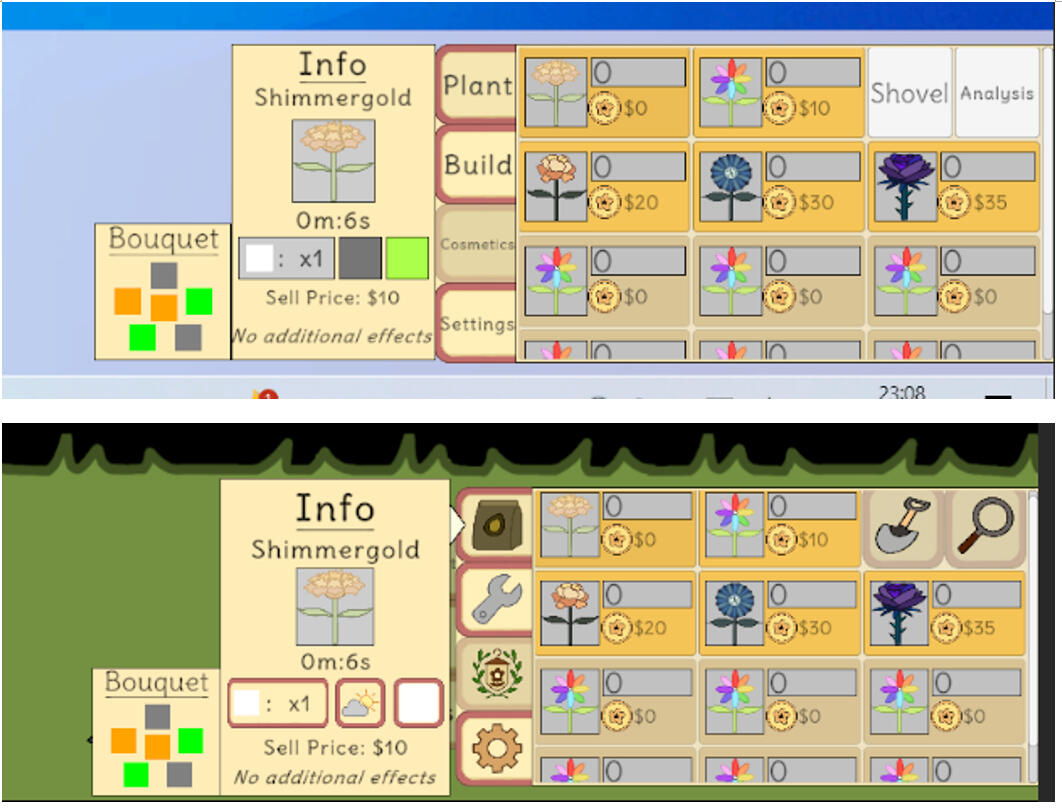
Creating UI for 1/3 of the screen was a unique and challenging experience. It was a careful balancing act in creating UI that was large enough to be readable and easy to use whilst using as minimal space as possible to ensure players are able to view their flowers and critter friends working at all time. I was also responsible for implementing the majority of UI from concept to functionality and if not making sure it was functional, user friendly and matched the core art style set by the art lead.
Design Iterations

Iteration 1

Iteration 2

Final Version
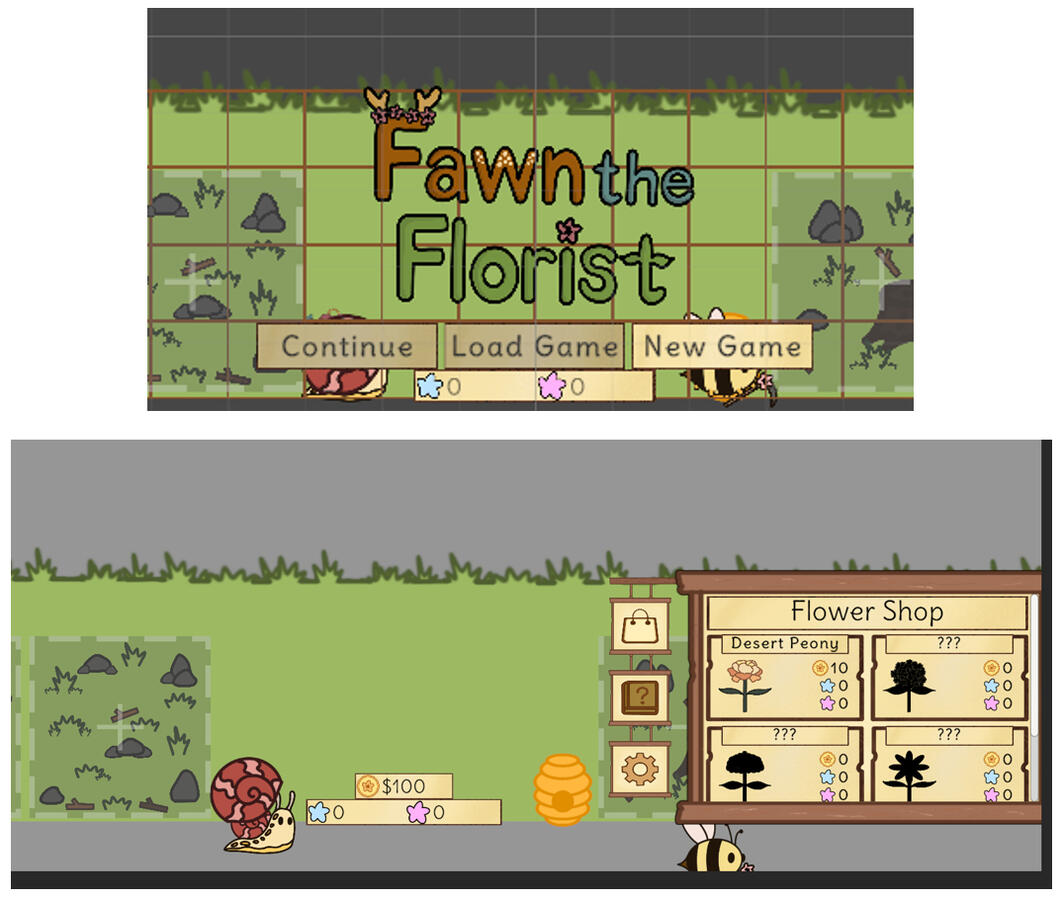
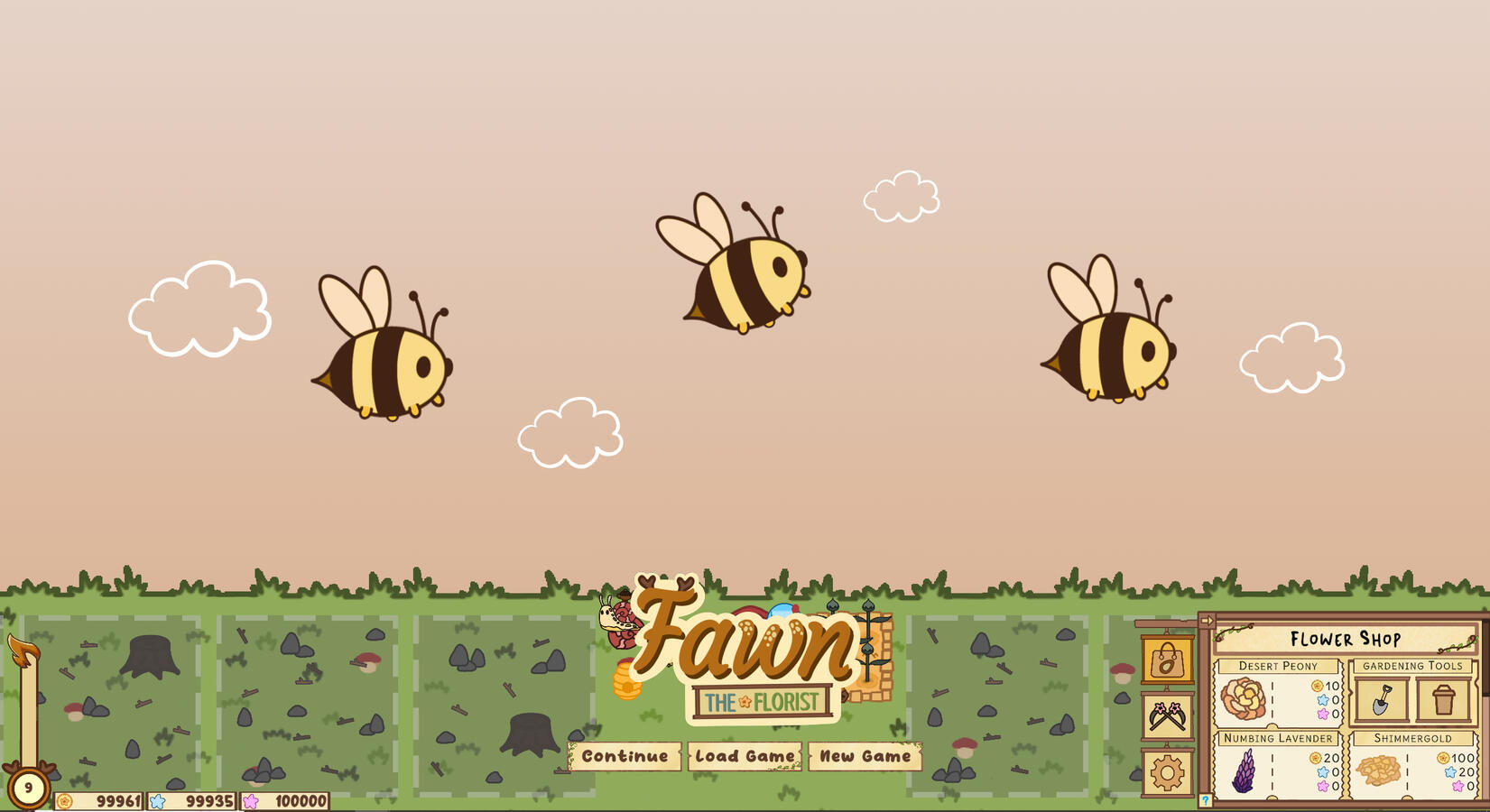
UI Designs Final

Flower Shop
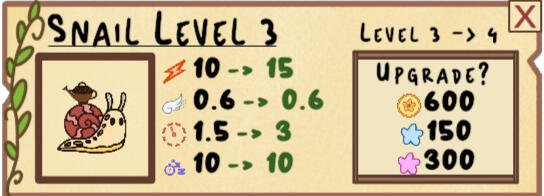
Automation Upgrade

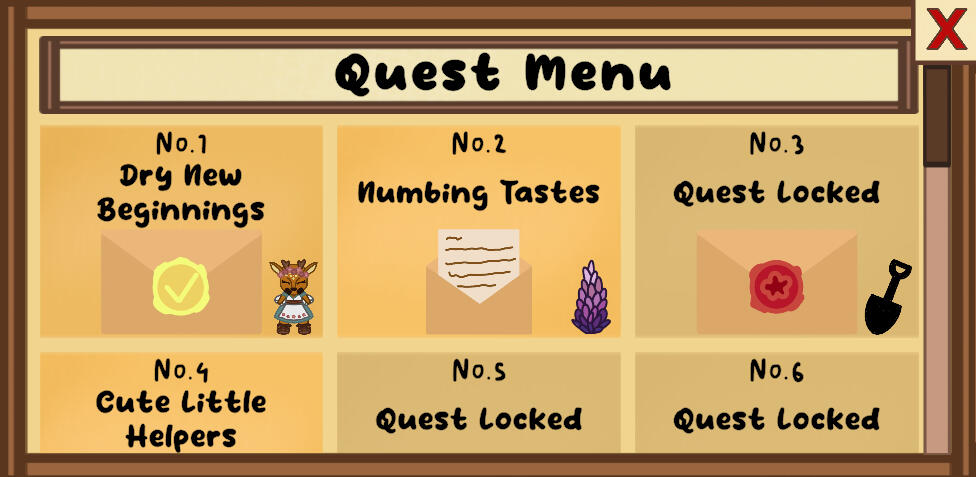
Quest Menu

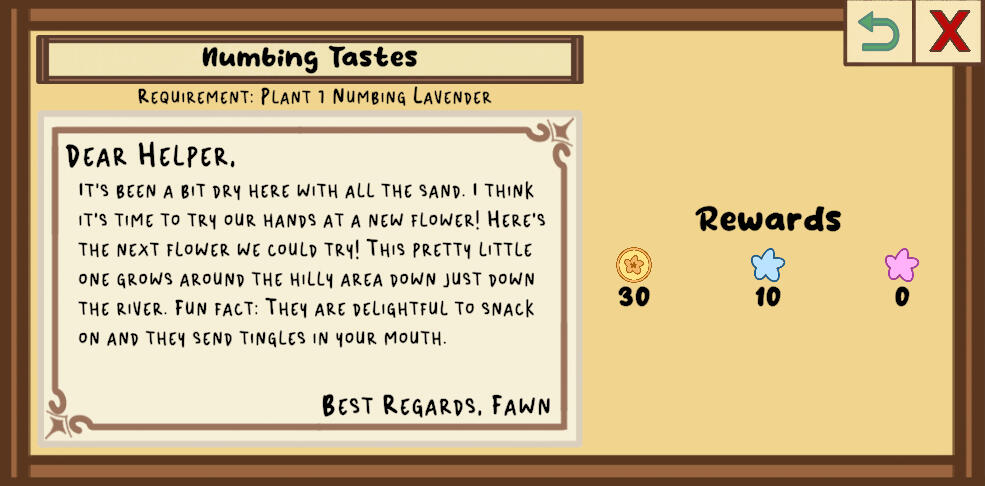
Letters

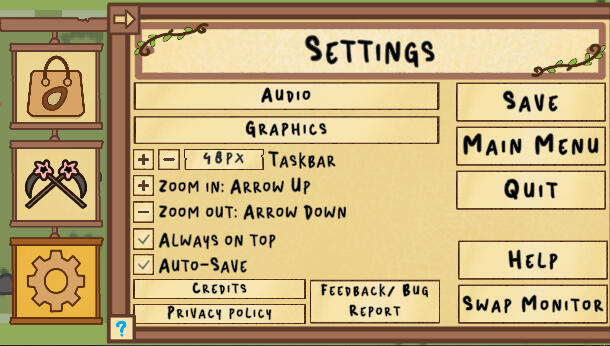
Settings

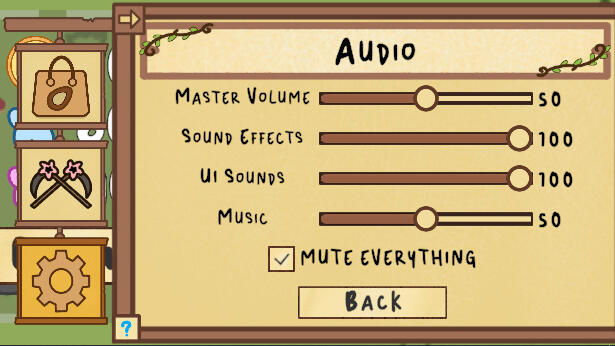
Adjustable Settings
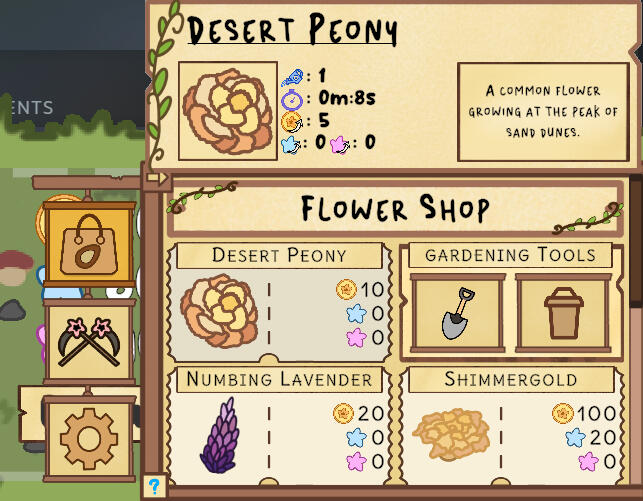
UI Animations